Key Takeaways
- Topical authority describes how comprehensively and usefully a website covers a subject and its related questions.
- It is an SEO concept, not a publicly confirmed Google ranking score or a replacement for backlinks.
- Build topic coverage around audience needs, search intent, accurate information and helpful internal links.
- Measure progress through relevant rankings, organic traffic, conversions and the quality of your topic coverage—not an invented authority percentage.
Topical authority is a way of describing the depth, relevance and consistency of a website’s coverage of a subject. When a site publishes useful content that answers the important questions around a topic, connects related pages clearly and demonstrates first-hand knowledge, it can become a more useful resource for readers and a stronger candidate for relevant search queries.
The concept is often discussed as if it were a specific Google metric. That distinction matters: Google does not publish a universal “topical authority score” that website owners can check, and topical authority should not be treated as a guaranteed ranking factor that automatically outweighs links or other signals.

What Is Topical Authority in SEO?
Topical authority is the perceived expertise and usefulness a website demonstrates by covering a subject thoroughly and accurately. It comes from the overall quality and relevance of a site’s content—not simply from publishing a large number of articles or repeating related keywords.
For example, a website about keyword research could cover seed keywords, search intent, keyword difficulty, long-tail keywords, competitor analysis, keyword mapping and how to use keywords in content. Each article should answer a distinct reader need, while the collection should make it easy to move between closely related subjects.
This approach helps readers understand a topic without having to piece together disconnected or repetitive articles. It also gives search engines clearer context about how the site’s pages relate to one another.
Topical Authority vs. Domain Authority
These terms describe different ideas. Domain Authority is a third-party SEO metric used by some tools to estimate a site’s relative ranking strength; it is not a Google metric. Topical authority is a broader content strategy concept about depth and relevance within a subject area.
| Aspect | Domain Authority | Topical Authority |
|---|---|---|
| What it describes | A third-party estimate of overall link-based strength | Depth and usefulness of coverage in a subject |
| How it is assessed | Tool-specific backlink and other data | Qualitative and quantitative review of content coverage, relevance and performance |
| Scope | Generally site-wide | Usually focused on a topic or subject area |
| Google score? | No | No publicly confirmed standalone score |
Why Does Topical Authority Matter?
A well-organized collection of genuinely helpful pages can support organic visibility in several ways:
- Better topic coverage: You can answer a wider range of relevant questions instead of relying on one broad article.
- Clearer relationships between pages: Contextual internal links help readers discover related explanations and help crawlers find your content.
- More opportunities to meet search intent: Separate pages can address distinct informational, comparison and practical needs where a separate page adds value.
- Stronger user experience: Readers can move from an overview to detailed instructions without repeatedly searching elsewhere.
These benefits do not guarantee higher rankings. Search performance also depends on factors such as content quality, competition, technical accessibility, relevance to the query, site reputation and links. A large content cluster cannot compensate for inaccurate, copied or unhelpful material.
How Search Engines Understand Topics and Entities
Search engines use language understanding and other systems to interpret queries and content. They can identify concepts, entities and relationships, rather than relying only on exact keyword matches. For example, an article about keyword research may naturally discuss search volume, search intent, SERPs, keyword difficulty and content planning.
This does not mean that a website must mention a fixed list of entities or follow a secret semantic formula. Include related concepts when they genuinely help explain the subject. Avoid adding terms merely to make an article appear more comprehensive.
Google’s published documentation on creating helpful, reliable, people-first content is a better practical guide than treating individual patents or simplified vector diagrams as a description of Google’s live ranking system.
How to Build Topical Authority Step by Step
1. Choose a focused core topic
Start with a subject that matches your audience, your expertise and your website’s purpose. A narrow, relevant topic is usually easier to cover meaningfully than a broad subject that stretches beyond your site’s experience.
2. Research subtopics and search intent
Use keyword research, search results, customer questions, support conversations and competitor analysis to identify what people need to know. Group queries by intent and by the problem they solve. Do not create a separate page for every minor keyword variation; combine closely related queries when one strong page can satisfy them.
For more on the foundations, see our guides to seed keywords and discovering seed keywords.
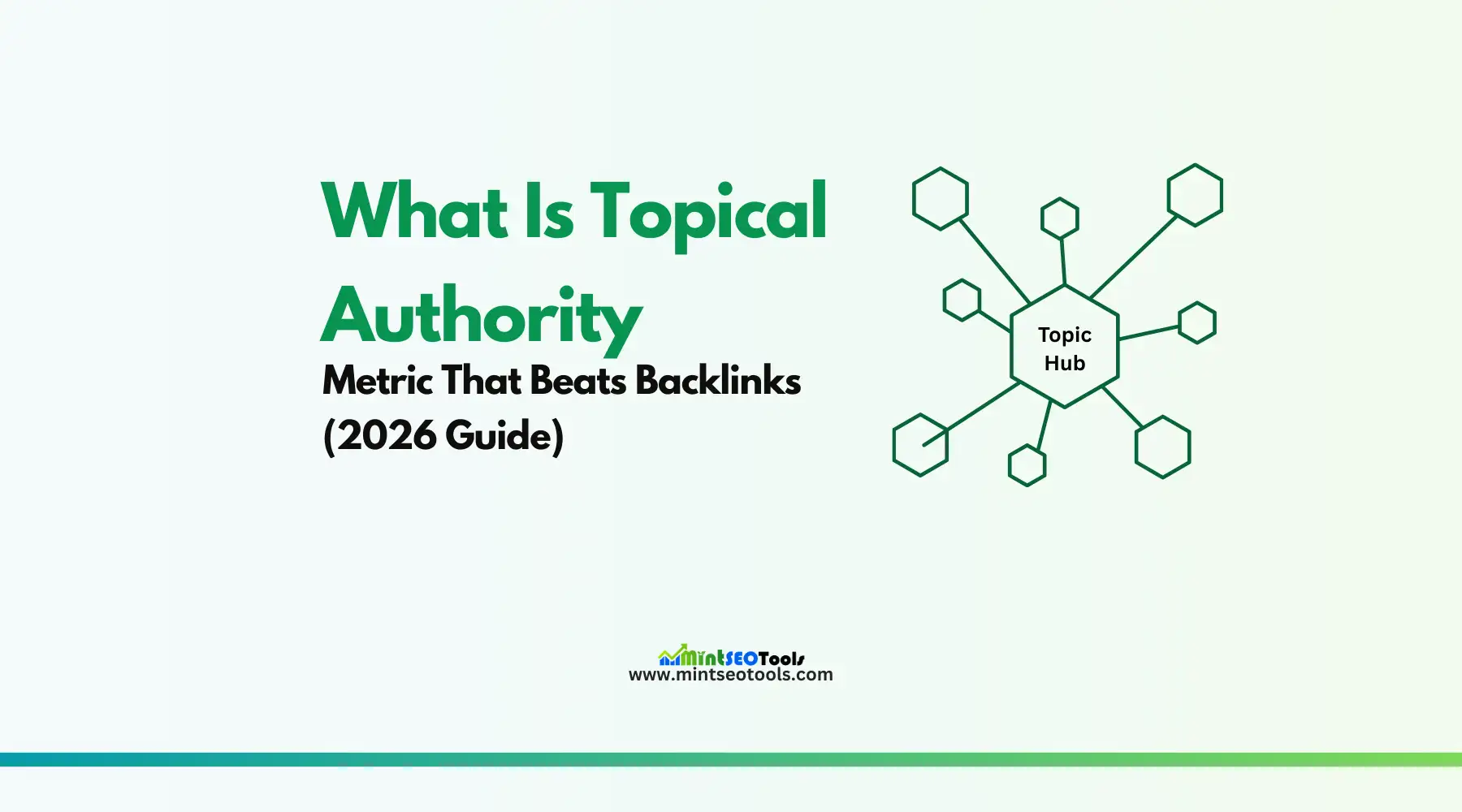
3. Build a useful pillar-and-cluster structure
Create an overview page for the main subject, then publish focused supporting pages for important subtopics that deserve their own treatment. The pillar page should introduce the subject and guide readers to deeper resources. Supporting pages should answer specific questions and link back when that link helps the reader.
Do not force every website into a fixed number of cluster articles. The right size depends on the subject, audience needs and the amount of useful information available.
4. Publish original, genuinely useful content
Give readers more than a rewritten summary of competing pages. Add practical steps, original examples, screenshots, data you can verify, expert commentary or lessons from real experience. Explain limitations and update claims when the underlying information changes.
5. Add contextual internal links
Link between pages where the relationship is useful and clear. Use descriptive anchor text that tells readers what they will find. Link from supporting articles to relevant overview pages and between related supporting articles, but avoid repetitive exact-match anchors or links that do not fit the surrounding paragraph.
For related foundations, readers can also explore what SEO is, on-page SEO and technical SEO.
6. Review and improve the content
Review pages when facts, tools, products or search intent change. Update outdated instructions, replace broken links, add missing explanations and consolidate overlapping pages when that creates a better resource. Do not change a publication date or rewrite a page just to make it look fresh.

How to Evaluate Your Topical Coverage
There is no official topical authority percentage or universal threshold that makes a site a topical leader. Instead, use a combination of content review and real performance data:
- Coverage: Have you answered the important questions your intended audience has about the subject? Identify meaningful gaps rather than chasing every keyword variation.
- Search performance: In Google Search Console, review relevant queries, impressions, clicks, average positions and the pages receiving that traffic.
- Engagement and outcomes: Use analytics to understand whether visitors explore related pages, complete useful actions or become leads and customers.
- Internal linking: Check that important pages are discoverable and connected through relevant contextual links.
- Content quality: Review accuracy, originality, clarity, expertise and whether each page provides something useful beyond what is already available.
You can also compare your site’s visibility with competitors across a carefully defined group of queries. Treat estimated traffic share as an internal benchmarking exercise only: search-volume estimates, ranking coverage and click-through rates vary, so this is not a Google authority score.
Common Topical Authority Mistakes
Publishing too many thin articles
More URLs do not automatically create more expertise. Avoid publishing near-duplicate pages that repeat the same advice with slightly different keywords. Combine overlapping content when one comprehensive page better serves the reader.
Ignoring search intent
A page can mention the right terms and still fail if it does not answer the question. Study the intent behind the query and provide the format and level of detail that genuinely helps the audience.
Treating internal links as a quota
There is no universal rule that every page needs exactly three internal links. Add links where they improve navigation and context. Quality and relevance matter more than hitting an arbitrary count.
Making unsupported ranking promises
Avoid claims that topical authority guarantees instant rankings, replaces backlinks or produces a predictable result within a fixed number of months. Explain what you can observe and measure, and distinguish established guidance from your own working hypotheses.

Frequently Asked Questions
Is topical authority a Google ranking factor?
Google does not publish a standalone topical authority score. However, creating helpful, relevant and well-organized content can support a site’s ability to serve searches related to its subject. Do not confuse the SEO concept with a confirmed single ranking signal.
How long does it take to build topical authority?
There is no fixed timeline. Progress depends on the competitiveness of the topic, the quality and usefulness of your content, your site’s existing visibility and how well your pages meet search needs. Monitor performance over time rather than relying on a promised three- or six-month result.
Can a new website build topical authority?
Yes. A newer site can focus on a well-defined subject and publish useful, original resources. It may take time to earn visibility and trust, and results are not guaranteed. Start with a topic that matches your real expertise and audience needs.
Is topical authority more important than backlinks?
They are not interchangeable. Helpful topical coverage can make a site more relevant to a subject, while links can provide discovery and signals of reputation. The right SEO strategy considers content quality, relevance, links, technical health and the needs behind each search query.
How many articles do I need to build topical authority?
There is no magic number. Publish enough distinct, high-quality pages to cover the important questions your audience has. A small set of excellent, connected resources is more valuable than dozens of repetitive articles.
Final Thoughts
Building topical authority is not about chasing a score or publishing the largest number of articles. It is about becoming a genuinely useful resource on a subject: understand your audience, cover the questions that matter, create original and accurate content, connect related pages and improve the experience as needs change.
Start with one focused topic, map its most important reader questions and build a connected set of resources that demonstrates real knowledge. Measure the results using search visibility, relevant traffic and meaningful user outcomes—not unsupported promises.

- What Is Topical Authority in SEO? How to Build It - February 20, 2026
- What Are Google AI Overviews? SEO Guide for 2026 - February 3, 2026
- How Search Engines Use AI to Rank Content: A Complete Guide (2026) - January 27, 2026